Replacing a furnace is a decision most homeowners make only a few times, so it is understandable if the specifications on a proposal feel unfamiliar. Efficiency percentages, heating capacity, blower types, venting requirements, and equipment combinations can make two seemingly similar furnaces very different once they are operating in your home.
For Utah homeowners, choosing replacement equipment also means thinking about winter heating demand, the condition of the existing HVAC system, and how the new furnace will work with the rest of the house. Rather than choosing based only on price or a familiar brand name, it helps to understand the major decisions before comparing models and estimates.
Start With the AFUE Rating, but Do Not Stop There
One of the first specifications you will see when comparing a gas furnace is its AFUE rating. AFUE stands for Annual Fuel Utilization Efficiency. It represents how much of the fuel consumed by the furnace is converted into useful heat over a heating season.
For example, a furnace with a 95% AFUE rating is designed to convert approximately 95% of its fuel energy into useful heat under standardized testing conditions. The remainder represents energy that is not converted into usable heat.
Higher efficiency can reduce fuel consumption, but the highest AFUE rating is not automatically the right purchase for every home. Upfront equipment cost, expected heating demand, venting changes, the length of time you expect to own the home, and installation requirements can all affect the value of a higher-efficiency model.
Homeowners comparing energy-efficient furnaces can also review federal efficiency guidance from the U.S. Department of Energy. Utah is included in the northern region in the Department of Energy’s residential furnace purchasing guidance, where heating demand makes furnace efficiency particularly relevant.
Compare Efficiency With the Total Cost of Ownership
Instead of asking only, “What is the highest AFUE rating available?” consider asking:
- How much more does the higher-efficiency model cost?
- How much fuel could it reasonably save in this particular home?
- Does it require different venting or drainage?
- Are there utility incentives or rebates available?
- How long do I expect to stay in the home?
Energy efficiency should be part of the buying decision, but it needs to be considered alongside the house, equipment design, and long-term operating costs.
Furnace Size Is About Heating Demand, Not Just Square Footage
A common misconception is that choosing a furnace is simply a matter of matching BTU capacity to the home’s square footage. Square footage matters, but it is only one part of the calculation.
Insulation, windows, ceiling height, air leakage, orientation, layout, and local design temperatures can all affect how much heating capacity a house requires. That is why proper furnace sizing deserves attention before selecting a particular model.
A professional furnace load calculation can provide a more complete picture of how much heating the house actually needs.
Why Bigger Is Not Necessarily Better
An oversized furnace can heat a house quickly, but that does not necessarily mean it will heat the house well. Equipment that is too large may cycle on and off frequently rather than operating for longer, steadier periods.
Frequent cycling can affect comfort, efficiency, and equipment wear. It may also contribute to noticeable temperature swings between different areas of the house.
Undersizing creates the opposite problem. A furnace that does not have enough capacity may struggle to maintain the desired indoor temperature during the coldest weather.
Before agreeing to a replacement, ask how the recommended furnace capacity was determined. “It matches the old furnace” is not as informative as a recommendation based on the actual characteristics and heating requirements of the home.
Decide Between a Gas Furnace and Electric Furnace
Fuel type is another major purchasing decision. Many Utah homes use natural gas, but an electric furnace may be considered in homes where gas is unavailable or where the existing mechanical setup makes electricity more practical.
A gas furnace burns fuel and uses a heat exchanger to transfer heat into the home’s air without allowing combustion gases to enter the conditioned airflow. Because combustion is involved, proper venting and safety controls are essential.
An electric furnace creates heat through electric resistance elements. It does not require combustion venting, but operating costs can differ considerably depending on local electricity prices, heating demand, and the efficiency and configuration of the overall system.
Homeowners comparing the two should look beyond the initial equipment price. Ask for an explanation of expected operating costs, available utilities, electrical requirements, venting requirements, and how each option fits the home.
Check the Ductwork Before Choosing Equipment
A new furnace still relies on the home’s duct system to distribute conditioned air. If the ducts are poorly sized, damaged, restrictive, or leaking, buying more sophisticated equipment may not solve existing comfort problems.
Ductwork sizing needs to support the amount of airflow required by the furnace and cooling system. Restrictions can contribute to excessive static pressure, reduced airflow, noise, and uneven temperatures.
Before selecting equipment, ask whether the existing supply and return ducts can handle the proposed system. This is especially important if the replacement furnace has a different airflow requirement from the old equipment or if rooms have always been difficult to heat or cool.
It is also worth mentioning longstanding comfort problems during the estimate. A bedroom that is always cold or a second floor that never feels comfortable may point to a distribution issue rather than a furnace-capacity problem.
Consider the Age of Your Air Conditioner
The furnace may need replacement first, but it often shares important components with the air conditioning system. In a typical split HVAC system, the furnace blower circulates air for both heating and cooling, and the indoor AC coil is commonly installed near the furnace.
That makes the age and condition of the existing air conditioner relevant when selecting a new furnace.
If the AC is relatively new and performing well, replacing only the furnace may make sense. If the cooling system is approaching the end of its expected service life, homeowners may want to compare the cost and compatibility implications of a furnace and AC combo instead.
North Star notes that furnace and AC replacement do not always need to happen simultaneously, but an older furnace can affect AC performance because the systems share a blower.
Questions to Ask About a Furnace and AC Combo
If both systems are aging, ask whether replacing them together would improve equipment matching, airflow, controls, or installation planning.
You should also ask what happens if you replace the furnace now and the AC several years later. Understanding future compatibility can prevent a short-term furnace choice from unnecessarily limiting cooling options later.
Make Sure the Thermostat Is Compatible
A thermostat may look like a small part of the system, but it can affect which furnace features you are actually able to use.
Basic single-stage furnaces generally have straightforward control requirements. More advanced systems may use two-stage heating, variable-speed blowers, communicating controls, zoning, or other features that require compatible thermostats and wiring.
If you plan to keep an existing smart thermostat, ask whether it can control all the functions of the proposed furnace. A thermostat might technically turn the system on and off while still failing to support some of the equipment’s more advanced features.
It is also worth checking the existing thermostat wiring. Older homes may not have all the conductors required by certain modern controls.
Understand What Changes With High-Efficiency Venting
Replacing an older furnace with a high-efficiency gas furnace may require more than connecting the new unit to the existing flue.
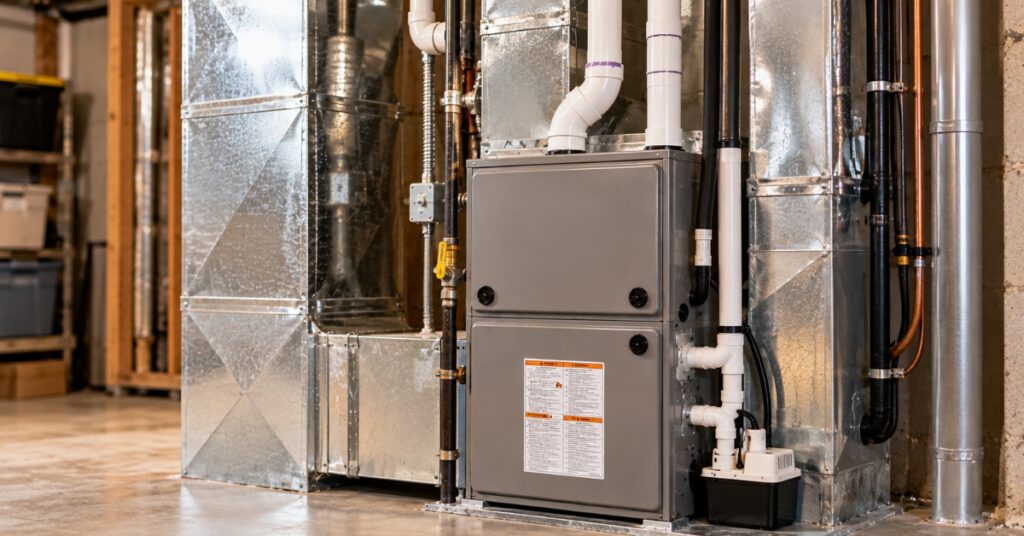
Condensing furnaces recover additional heat from combustion gases. This improves efficiency, but it also changes how exhaust is handled and creates condensate that needs to drain properly. The Department of Energy notes that condensing furnaces have different installation considerations and recommends sealed combustion for these systems.
Ask where the intake and exhaust pipes will terminate, whether the existing vent can still be used, how condensate will be handled, and whether the proposed equipment requires modifications to the mechanical space.
These details can influence both installation complexity and the total project price.
Do Not Overlook the Heat Exchanger
For a gas furnace, the heat exchanger is a critical component. It separates combustion gases from the air that circulates through the home.
When comparing furnaces, homeowners often focus heavily on AFUE rating, brand, and warranty length. It is also worth asking about heat exchanger warranty coverage and what the warranty actually includes.
If your current furnace is being replaced because of a suspected heat exchanger problem, ask the technician to explain the diagnosis. Understanding why the old system failed may also help identify airflow, maintenance, or equipment-sizing issues that should be addressed before installing the replacement.
Ask About Permits and Inspections Before Signing
A furnace replacement is not simply an appliance swap. It involves fuel, electrical connections, ventilation, airflow, and safety requirements.
Most cities and counties in Utah require a building permit for HVAC equipment change-outs. North Star states that it handles the permitting process for furnace replacements and makes sure the completed work passes inspection.
Ask whether the quoted price includes the building permit and who will coordinate permits and inspections. You should also know whether an inspection will occur after installation and whether any code-related modifications have been included in the proposal.
This is an important area to clarify when comparing estimates because a lower initial quote may not represent the same scope of work.
Compare Furnace Features You Will Actually Use
Modern furnaces can include several levels of operation. A basic unit may provide one heating stage, while other models offer two-stage burners, variable-speed blowers, or communicating controls.
These features can affect comfort, noise, airflow, and energy use.
Single-Stage Furnaces
A single-stage furnace generally operates at one heating output whenever it runs. Its simpler design may appeal to homeowners prioritizing initial cost.
Two-Stage Furnaces
A two-stage system can operate at a lower heating level during milder conditions and move to higher output when greater heating demand exists. Longer operation at the lower stage can provide steadier temperatures in some homes.
Variable-Speed Blowers
Variable-speed technology allows the blower to adjust airflow rather than operating at one fixed speed. Depending on the overall system design, this can support more consistent airflow, quieter operation, and better coordination with cooling equipment.
The important question is not simply which furnace has the longest feature list. Ask which features solve an actual comfort, efficiency, or airflow need in your home.
What Should Be Included in a Furnace Quote?
Comparing furnace quotes solely by the bottom-line price can be misleading. Two contractors may quote similar furnace models while including very different scopes of work.
A useful proposal should make it reasonably clear what equipment is being supplied and what work is included. Look for information about:
- Furnace model and heating capacity
- AFUE rating
- Number of heating stages
- Blower type
- Thermostat or control changes
- Venting modifications
- Condensate drainage, when applicable
- Ductwork transitions or modifications
- Electrical and gas connections
- Permit and inspection responsibilities
- Labor and equipment warranties
- Removal and disposal of existing equipment
If something is unclear, ask before comparing prices. The goal is to compare complete systems and project scopes rather than equipment boxes.
Questions Worth Asking Before You Choose
Before approving a furnace purchase, you should be able to get clear answers about why the proposed equipment fits your home.
Ask how the heating capacity was determined, why a particular AFUE rating is being recommended, whether your ducts can support the necessary airflow, and whether your existing thermostat will work properly.
Also ask what venting changes are required, who handles the permit and inspection, and whether the age of your AC affects the decision.
These questions can reveal meaningful differences between proposals that initially appear similar.
FAQ: Choosing a New Furnace in Utah
What does an AFUE rating tell me?
AFUE measures the percentage of fuel energy a furnace converts into useful heat over a heating season under standardized conditions. A higher percentage indicates greater fuel-use efficiency, but AFUE alone does not determine which furnace is the best fit for a particular house.
Is a 95% AFUE furnace worth it in Utah?
It can be, depending on the home, heating demand, fuel costs, equipment price, and how long you expect to use the system. Utah is categorized within the northern region in current Department of Energy residential furnace efficiency guidance.
Should I buy a bigger furnace so the house heats faster?
Not simply for faster heating. A furnace should be sized for the home’s heating load. Oversized equipment can cycle too frequently, while undersized equipment may have difficulty maintaining comfortable temperatures during very cold weather.
Should I replace my furnace and AC at the same time?
Not necessarily. Consider the AC’s age, condition, compatibility, and expected remaining service life. If both systems are old, comparing a coordinated replacement with furnace-only replacement can help you understand the long-term costs and equipment options.
Does a new furnace require a new thermostat?
Not always. However, furnaces with multi-stage heating, variable-speed operation, or communicating technology may need specific controls to provide their full functionality. Ask whether your existing thermostat and wiring support the proposed equipment.
Does replacing a furnace require a permit in Utah?
Requirements can vary by jurisdiction, but most Utah cities and counties require a permit for HVAC change-outs. The contractor should explain the applicable permit and inspection process for your location.
Does ductwork affect which furnace I should buy?
Yes. The duct system needs to move the airflow required by the furnace. Existing restrictions, leaks, undersized returns, or other duct problems can affect comfort and equipment performance.
Make the Equipment Fit the Home
A furnace purchase should start with the house rather than a model number. The right choice depends on heating demand, efficiency goals, available fuel, airflow, ductwork, controls, venting, existing cooling equipment, and local code requirements.
Understanding those factors before comparing proposals makes it easier to identify meaningful differences between furnace options. Instead of simply asking which unit costs the least or has the highest AFUE rating, homeowners can ask a more useful question: Why is this particular furnace the right size, configuration, and efficiency level for this home?