Replacing an aging air conditioner or furnace may seem straightforward. If the old system was a certain size, it can be tempting to install another unit with the same capacity and assume it will perform the same way. The problem is that the existing equipment may never have been properly sized for the home in the first place.
Homes also change over time. New windows, added insulation, finished living areas, remodeling projects, and other improvements can affect heating and cooling needs. Instead of treating the old equipment as the sizing guide, a Manual J load calculation looks at the characteristics of the home to determine how much heating and cooling it actually requires.
Why Matching the Old HVAC System Can Be a Mistake
An existing furnace or air conditioner tells an HVAC contractor what was installed previously. It does not necessarily reveal what should be installed next.
Older systems may have been selected using broad rules of thumb based primarily on square footage. Some were intentionally oversized under the assumption that having more heating or cooling capacity was safer. Others may have been installed before renovations changed the home’s thermal characteristics.
Before a new HVAC installation, the better approach is to evaluate the current house. North Star uses load calculations for new installations, so equipment selection is based on the home’s needs rather than an assumption about the previous system. Homeowners considering replacement can review available HVAC services and the types of heating and cooling work involved before choosing new equipment.
Proper sizing becomes especially important because an HVAC system affects much more than the temperature displayed on the thermostat. Equipment capacity influences runtime, airflow, humidity management, energy efficiency, and how evenly conditioned air reaches different areas of the house.
What a Manual J Load Calculation Actually Measures
A Manual J calculation is a residential load calculation methodology developed by Air Conditioning Contractors of America. Rather than relying on one characteristic of a home, it accounts for multiple factors that affect heat gain and heat loss.
Square footage is certainly part of the equation, but it is only one piece.
Square Footage and Layout
Two homes with the same square footage can have very different HVAC requirements. A single-story home with an open floor plan does not necessarily gain and lose heat the same way as a multi-level home with numerous smaller rooms.
Ceiling heights matter as well. A home with vaulted ceilings contains more air volume than one with standard-height ceilings, even if both properties have identical floor areas.
Room arrangement, exterior wall exposure, and additions can further change the load placed on central air conditioning and heating equipment.
Insulation Levels
Insulation slows heat transfer through the building envelope. A well-insulated home generally holds conditioned air more effectively, which can reduce the heating or cooling capacity needed to maintain comfortable indoor temperatures.
The insulation in walls, ceilings, attics, and other parts of the home can therefore have a meaningful effect on equipment sizing.
This is one reason simply copying the capacity of an older furnace can be problematic. If attic insulation has been upgraded since that furnace was installed, the home’s current heating requirements may be different.
Windows Can Significantly Affect Heating and Cooling Loads
Windows are another major consideration because they influence both heat loss and solar heat gain.
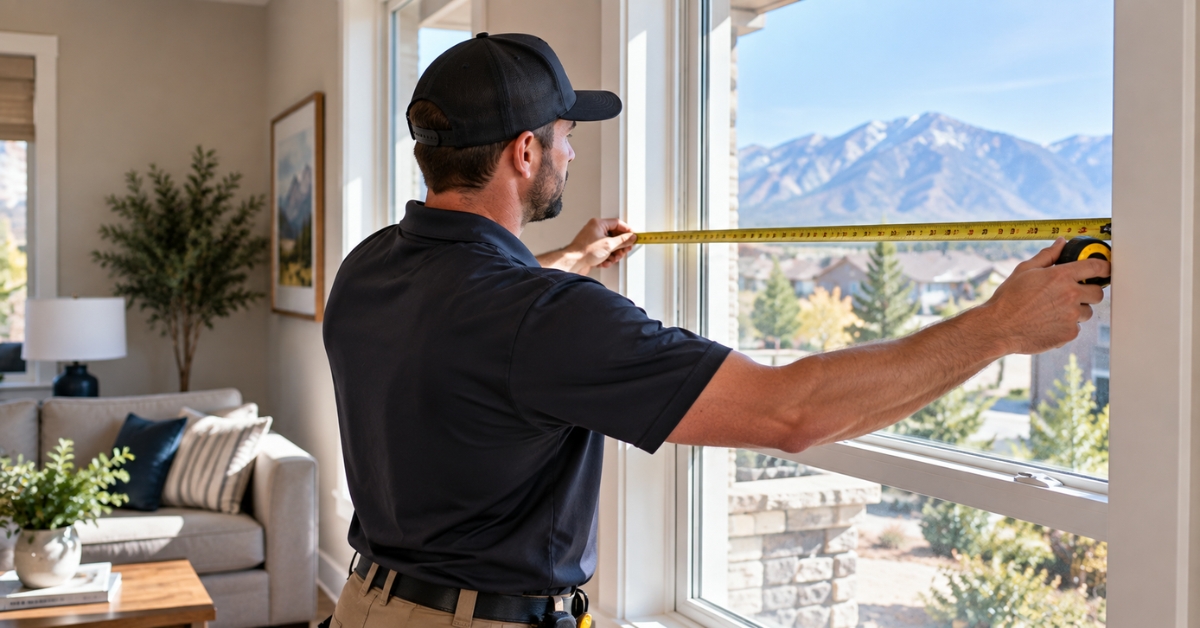
A load calculation considers characteristics such as window size, type, quantity, and orientation. Older single-pane windows may behave very differently from modern insulated windows. Large expanses of glass can also increase cooling loads when exposed to direct sunlight.
A room with several west-facing windows, for example, may experience substantial afternoon heat gain during Utah summers. Another similarly sized room on the opposite side of the home may behave quite differently.
That difference would be missed if equipment were selected solely according to total square footage.
Why Home Orientation Matters
The direction a home faces affects how sunlight reaches different exterior walls and windows throughout the day.
South- and west-facing areas can receive significant solar exposure, while other sections of the home may remain comparatively shaded. Roof characteristics, nearby structures, trees, and other sources of shade can further influence heat gain.
A Manual J load calculation accounts for these characteristics instead of treating every home of a particular size as though it experiences the same conditions.
This matters during air conditioning installation because the cooling system must be able to handle the home’s actual heat gain during demanding conditions without being unnecessarily oversized.
Utah’s Climate Adds Another Layer to HVAC Sizing
Utah homes experience both hot summers and cold winters, which means HVAC equipment needs to perform across substantially different seasonal conditions.
Heating requirements must account for cold outdoor temperatures and heat loss through the building envelope. Cooling calculations consider outdoor heat, solar exposure, windows, insulation, and other sources of indoor heat gain.
Local conditions are one reason generic equipment-sizing formulas have limitations. A house is not simply a number of square feet that needs a certain number of BTUs or tons of cooling.
The building and the environment surrounding it work together to determine the actual load.
Oversized Equipment Is Not Necessarily Better
It is easy to assume that a larger air conditioner or furnace provides an extra margin of protection. In practice, oversized equipment can introduce its own problems.
An oversized AC may cool the home rapidly and then shut down before completing a longer, more stable cooling cycle. This behavior is commonly called short cycling.
Frequent starts and stops can affect energy use and place additional stress on system components. Short cooling cycles may also reduce the system’s opportunity to manage indoor humidity effectively.
Similar concerns apply to heating equipment. An oversized furnace may raise the indoor temperature quickly, shut down, and then restart again when the thermostat calls for heat.
Homeowners planning furnace installation can benefit from understanding proper furnace sizing because capacity affects more than whether the furnace can technically heat the house. It also affects comfort, cycling, and efficiency.
Undersized HVAC Equipment Creates Different Problems
Going too small is not the answer either.
An undersized air conditioner may struggle to satisfy the thermostat during the hottest part of the summer. The system can run for extended periods while certain rooms remain warmer than desired.
An undersized furnace can face a similar challenge during cold weather. It may operate nearly continuously while having difficulty maintaining the desired indoor temperature.
Longer runtimes are not automatically a sign of poor sizing because modern HVAC systems can be designed for longer, steadier operation. The concern arises when the equipment does not have enough capacity to meet the home’s calculated load under appropriate design conditions.
The objective is not to choose the biggest or smallest unit possible. It is to select equipment that fits the home’s actual requirements.
Ductwork Has to Work With the Equipment
Equipment sizing and ductwork sizing are closely connected.
A furnace or air conditioner needs sufficient airflow to operate correctly. Existing ducts may not necessarily be appropriate for a replacement system, particularly when equipment capacity or airflow requirements change.
Duct size, layout, restrictions, leakage, and return-air capacity can all affect system performance.
Putting a larger unit on ductwork that cannot support the required airflow can create problems even if the equipment itself is new. Homeowners may experience excessive air noise, weak airflow in certain rooms, temperature differences, or system performance issues.
That is why HVAC replacement should be considered as a system rather than simply swapping one metal cabinet for another.
Proper Sizing Can Improve Comfort Throughout the Home
A correctly sized system is intended to meet the home’s heating and cooling demands without relying on excessive capacity.
This can support longer and more consistent operating cycles, which help distribute conditioned air throughout the house. Instead of quickly satisfying the thermostat in one area and shutting down, the system has an opportunity to move air through the duct system and serve rooms farther from the equipment.
Of course, equipment sizing cannot solve every comfort problem. Poor duct design, air leakage, inadequate insulation, and other building issues can still contribute to uneven temperatures.
The load calculation gives the HVAC contractor a more reliable starting point for determining what the equipment itself needs to provide.
Energy Efficiency Depends on More Than an Efficiency Rating
Homeowners often compare HVAC equipment based on efficiency ratings, but selecting high-efficiency equipment is only part of the picture.
Even an efficient system can perform poorly when it is not appropriately matched to the home and the surrounding HVAC system.
Oversizing may contribute to unnecessary cycling. Undersizing can leave equipment operating heavily during demanding weather. Airflow problems can further interfere with expected performance.
Correct sizing helps create the conditions under which new equipment can operate closer to the way it was designed.
Equipment Life Can Be Affected by Sizing
Every HVAC system experiences wear during operation, but repeated starting and stopping can place additional demands on components.
An oversized system that frequently short cycles may accumulate a large number of startup cycles. An undersized system facing a load beyond its intended capacity may spend extended periods operating under demanding conditions.
Neither situation is ideal.
A properly performed load calculation helps reduce the likelihood that new equipment begins its service life with a fundamental sizing mismatch.
That becomes particularly important when replacing a major system expected to serve the home for many years.
A Replacement Is an Opportunity to Reevaluate the House
HVAC replacement provides an opportunity to look at the home as it exists today rather than assuming decisions made years ago are still appropriate.
Maybe the attic has more insulation now. Perhaps several windows have been replaced. An addition may have increased conditioned square footage, or a previously unfinished basement may now be part of the living space.
Even without major renovations, the previous system could simply have been incorrectly sized.
Evaluating those conditions before selecting equipment helps an HVAC contractor make a recommendation based on current information instead of inheriting an old sizing decision.
For homeowners replacing a furnace specifically, learning more about sizing and comfort can also clarify why the capacity printed on the old unit should not automatically determine the next one.
What Homeowners Should Expect Before a New Installation
Before installing a replacement AC or furnace, homeowners should expect the sizing discussion to involve more than the capacity of the existing equipment.
The process may include gathering information about the home’s construction, insulation, windows, square footage, orientation, and other factors relevant to heating and cooling loads. The HVAC professional may also need to consider the existing duct system and airflow requirements associated with the proposed equipment.
The purpose is not to make replacement unnecessarily complicated. It is to avoid spending money on a new system whose capacity was chosen primarily because it happened to match an older unit.
A new air conditioner or furnace should be selected for the house it needs to serve today.
FAQ About Manual J Load Calculations
Is a Manual J load calculation only necessary for new homes?
No. Load calculations can also be valuable when replacing HVAC equipment in an existing home. The old system may have been incorrectly sized, or changes to insulation, windows, additions, and other features may have altered the home’s heating and cooling requirements.
Can HVAC size be determined from square footage alone?
Square footage provides useful information, but it does not account for all the factors affecting heating and cooling loads. Insulation, windows, ceiling height, orientation, construction characteristics, and local climate conditions can all influence the amount of capacity a home needs.
What happens if my air conditioner is too large?
An oversized air conditioner may satisfy the thermostat quickly and shut off, resulting in shorter operating cycles. Frequent cycling can affect comfort, humidity management, energy use, and equipment wear.
What happens if a furnace is too small?
A furnace without sufficient capacity may have difficulty maintaining the desired indoor temperature during cold weather. It can operate for extended periods while still struggling to meet the home’s heating demand.
Does ductwork affect HVAC sizing?
Yes. The duct system needs to support the airflow requirements of the equipment. Ductwork sizing, layout, return-air capacity, restrictions, and leakage can all affect how effectively heating and cooling reach the home.
Does a load calculation guarantee every room will be the same temperature?
Not necessarily. Equipment sizing is one part of whole-home comfort. Duct design, insulation, air leakage, solar exposure, and other conditions can still cause temperature differences between rooms. However, proper sizing provides a much stronger foundation for balanced HVAC performance.
Should I replace my AC or furnace with the same size as the old one?
Not automatically. The capacity of the existing system is useful information, but it should not be the only basis for selecting replacement equipment. A Manual J load calculation evaluates the current characteristics of the home so the new system can be sized according to actual heating and cooling needs.