Your air conditioner is designed to remove heat and moisture from your home, but those same cooling processes can create conditions where mold may grow if parts of the system are neglected. While some condensation is completely normal, moisture that lingers inside the system can combine with dust and organic debris to create an environment where mold thrives.
Understanding how to prevent mold in AC system components starts with knowing where moisture collects and why it sometimes fails to drain properly. Homeowners who recognize the early warning signs can often reduce mold risks through regular maintenance, better airflow, and proper humidity management before a small issue becomes a larger one.
Why Moisture Is Necessary for Mold Growth
While mold spores naturally exist in both indoor and outdoor air, they usually remain inactive until they land on a damp surface with enough organic material to support growth.
Inside an air conditioning system, moisture is expected during normal cooling. Warm indoor air passes over the cold evaporator coil, causing water vapor to condense into liquid. Under normal conditions, this water drains away through the condensate system.
Problems develop when moisture remains trapped instead of leaving the system.
Common causes include:
- Poor drainage
- Restricted airflow
- Dirty system components
- High indoor moisture levels
- Infrequent maintenance
Reducing these conditions is the foundation of preventing mold growth.
Understanding the Difference Between Normal Condensation and Trapped Moisture
Many homeowners worry when they notice water around their AC system, but not all moisture indicates a problem.
Normal Condensation
As your air conditioner cools the air, condensation naturally forms on the evaporator coil. This water should immediately collect in the drain pan before flowing through the condensate drain line and safely exiting the home.
This process is expected and does not usually create mold problems.
Trapped Moisture
Moisture becomes a concern when it cannot leave the system efficiently.
Standing water inside the drain pan, water remaining on dirty coils, or damp insulation surrounding HVAC components can provide enough moisture for mold to develop over time.
If water remains in the system for days instead of minutes, mold risk increases significantly.
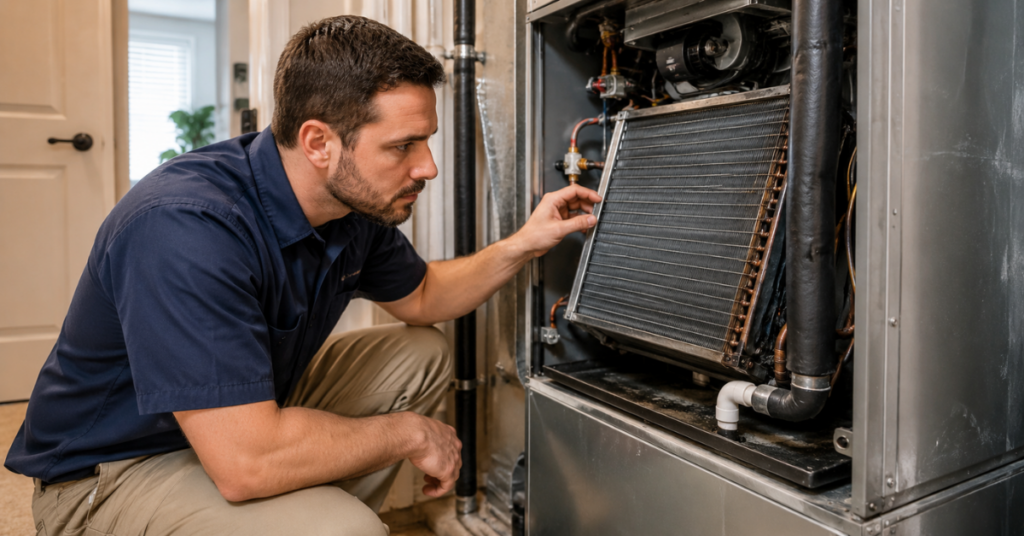
Dirty Evaporator Coils Can Hold More Moisture

A dirty evaporator coil is one of the most overlooked contributors to mold development.
Dust, pet hair, pollen, and other airborne particles naturally collect on the coil surface. When condensation forms on these dirty surfaces, the moisture mixes with debris that mold can feed on.
Instead of water draining quickly from a clean metal surface, moisture may cling to accumulated dirt.
Dirty coils can also reduce airflow, causing colder coil temperatures and additional condensation.
Professional cleaning removes these contaminants while helping the system operate more efficiently.
How Airflow Helps Prevent Mold
Air movement plays an important role in drying moisture before mold has time to grow. When airflow becomes restricted, moisture stays on coils, ducts, and surrounding components longer than intended.
Several issues may reduce airflow, including:
- Dirty air filters
- Closed supply vents
- Blocked return vents
- Dust buildup inside equipment
- Failing blower components
Restricted airflow does not automatically cause mold, but it creates conditions where moisture remains inside the system much longer than it should.
If airflow restrictions continue over time, scheduling maintenance that includes AC moisture control can help identify dirty components, drainage issues, and other conditions that allow excess moisture to remain inside the system.
Replace Air Filters Before They Become a Problem
Air filters help capture dust and airborne particles before they reach sensitive HVAC components.
When filters become clogged, airflow decreases throughout the entire system.
This reduced airflow contributes to:
- Longer cooling cycles
- Increased condensation
- Colder evaporator coils
- Greater moisture retention
- More dust accumulation inside equipment
Most disposable filters should be checked monthly and replaced according to the manufacturer’s recommendations or sooner if they appear dirty.
Homes with pets, construction dust, or allergy concerns may require more frequent replacement.
Why a Clogged Condensate Drain Increases Mold Risk

A clogged condensate drain is one of the most common moisture problems affecting residential air conditioners.
The condensate drain removes water produced during cooling. If algae, dirt, sludge, or debris block the drain, water backs up into the drain pan instead of leaving the system.
Standing water creates ideal conditions for mold growth.
Warning signs include:
- Water around the indoor unit
- Overflowing drain pans
- Frequent system shutoffs
- Excess moisture near the furnace or air handler
- Persistent dampness around HVAC equipment
Routine maintenance helps keep condensate drains flowing properly throughout the cooling season.
High Indoor Humidity Makes Mold More Likely
Even if your air conditioner operates normally, excessive indoor humidity can increase moisture throughout the home and HVAC system.
High humidity means more water vapor enters the cooling system every time the air conditioner runs.
Sources of elevated indoor humidity include:
- Poor ventilation
- Oversized air conditioners
- Leaking plumbing
- Damp crawl spaces
- Excessive outdoor moisture entering the home
Keeping indoor humidity within recommended levels helps reduce condensation throughout the entire HVAC system.
Musty Odors Are Often an Early Warning Sign
A persistent musty AC smell should never be ignored.
While musty odors do not always mean mold is present, they often indicate excess moisture somewhere within the HVAC system.
The odor may originate from:
- Dirty evaporator coils
- Standing water
- Damp insulation
- Mold growth inside components
- Dirty drain pans
If the smell returns shortly after changing the filter or cleaning nearby areas, further inspection may be needed to identify the underlying moisture source.
How Household Habits Affect Mold Risk
Daily habits can influence moisture levels inside your HVAC system.
Simple practices that help reduce mold-friendly conditions include:
Keep Vents Open
Closing multiple supply vents disrupts airflow and may contribute to excess condensation.
Replace Filters Regularly
Clean filters improve airflow while reducing dust accumulation inside equipment.
Address Water Leaks Quickly
Roof leaks, plumbing leaks, or basement moisture can increase humidity that eventually affects HVAC performance.
Schedule Routine Maintenance
Annual inspections allow technicians to clean coils, inspect drains, verify proper drainage, and identify developing problems before they worsen.
When Sticky Air May Signal a Moisture Problem
Sometimes homeowners notice sticky indoor air even though the air conditioner appears to be cooling normally.
This often indicates that moisture is not being removed as efficiently as it should be. High indoor humidity may result from oversized equipment, restricted airflow, drainage issues, or other conditions that limit the air conditioner’s ability to properly dehumidify the home.
While sticky air does not automatically indicate mold, ongoing humidity problems create an environment where mold has a better chance of developing over time.
When Professional Maintenance Makes the Biggest Difference
Many mold-related HVAC problems develop gradually rather than suddenly.
Professional maintenance helps identify conditions that homeowners may never see, including:
- Early drain restrictions
- Dirty evaporator coils
- Improper refrigerant performance
- Weak airflow
- Excessive moisture accumulation
- Drain pan deterioration
Correcting these issues early often prevents recurring moisture problems while helping the air conditioner operate more efficiently.
Small Maintenance Steps Can Reduce Mold Risk Year After Year
Preventing mold inside an air conditioning system is less about eliminating moisture entirely and more about allowing moisture to leave the system as intended. Condensation is a normal part of cooling, but trapped water, dirty components, restricted airflow, and neglected maintenance create opportunities for mold to develop.
By replacing filters regularly, keeping airflow unrestricted, monitoring humidity levels, cleaning system components, and ensuring proper drainage, homeowners can greatly reduce the conditions that support mold growth. A well-maintained air conditioning system not only cools more effectively but also helps maintain a cleaner and healthier indoor environment throughout the cooling season.
Frequently Asked Questions
Can mold grow inside an air conditioner even if it still cools properly?
Yes. An air conditioner may continue cooling while moisture remains trapped inside certain components. Mold can develop long before cooling performance noticeably declines.
How often should air filters be replaced?
Many disposable filters should be checked monthly and replaced every one to three months, depending on filter type, pets, household dust, and manufacturer recommendations.
Does every musty smell mean there is mold?
Not necessarily. A musty odor can result from accumulated moisture, dirty coils, standing water, or mold. Persistent odors should be inspected to determine the actual source.
Can high humidity make mold more likely?
Yes. Elevated indoor humidity increases condensation throughout the HVAC system, allowing moisture to remain on surfaces longer and increasing mold risk.
Is condensation inside an AC system normal?
Yes. Condensation naturally forms as the evaporator coil cools warm indoor air. Problems arise only when the water fails to drain properly or remains trapped inside the system.
Can homeowners clean the condensate drain themselves?
Some basic maintenance may be possible depending on the system, but recurring clogs, standing water, or drainage issues should be evaluated by an HVAC professional to ensure the entire drainage system is functioning correctly.