Changing an HVAC filter can feel like one of the smallest maintenance tasks in a home. During summer, however, that inexpensive filter sits directly in the path of the air your cooling system needs to move. When it becomes clogged, the effects can show up throughout the house much sooner than homeowners expect.
A neglected filter can contribute to longer cooling cycles, uneven temperatures, weaker airflow, and higher energy use. These problems become especially noticeable during hot weather because the air conditioner is already operating for longer periods. Understanding what happens when airflow is restricted can help homeowners recognize why filter replacement matters for much more than controlling dust.
Why Airflow Matters So Much During Cooling Season
An air conditioner does more than produce cold air. It continually pulls warm indoor air through the return system, passes that air across the evaporator coil, and distributes cooled air back through the home.
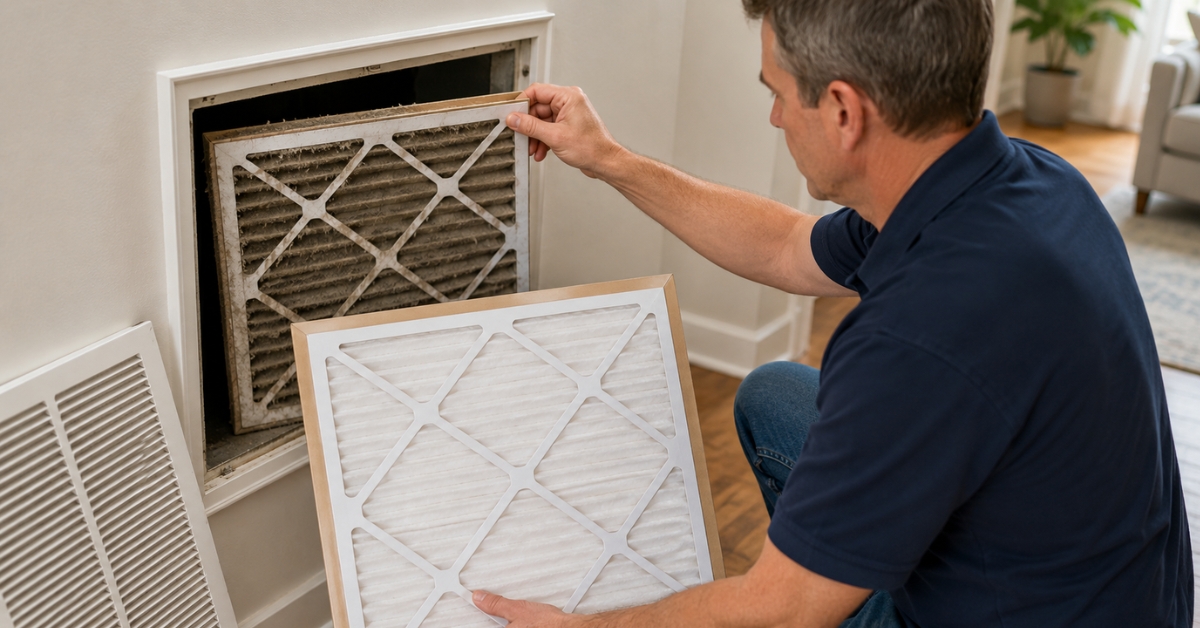
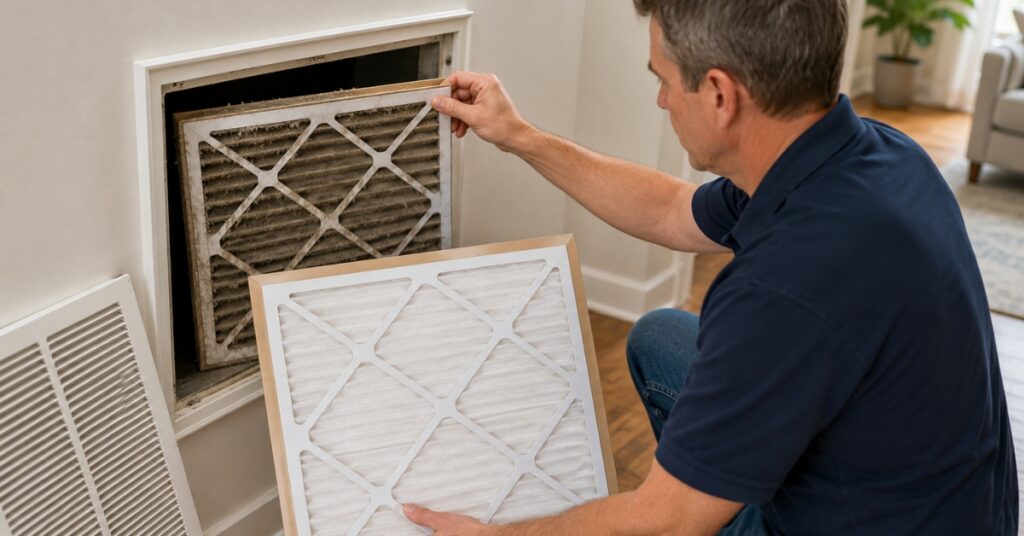
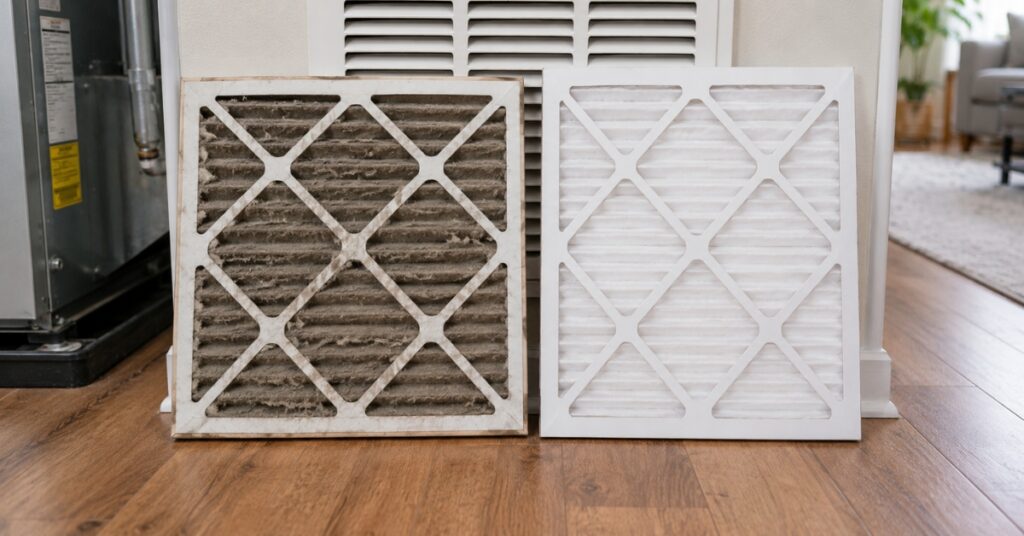
For that process to work properly, the system needs sufficient airflow. A clean filter allows air to pass through while capturing airborne particles. As the filter loads with dust, hair, lint, and other debris, it becomes increasingly difficult for the system to pull air through it.
Homeowners who are concerned about filtration, indoor air quality, or choosing the appropriate filter for their equipment can learn more about filter replacement and other indoor air quality considerations.
Airflow Restriction Changes How the System Operates
Airflow restriction does not necessarily cause the air conditioner to stop working immediately. In many cases, the system continues operating, which can make the problem easy to overlook.
The difference is that the equipment may have to operate longer to accomplish the same amount of cooling. Rooms may take longer to reach the thermostat setting, airflow from vents may feel weaker, and certain areas of the home may become less comfortable.
That gradual change is one reason filter problems often go unnoticed. The air conditioner is still running, but cooling performance is no longer what it should be.
A Dirty Filter Can Make Cooling Feel Slower
One of the first effects homeowners may notice is that the house simply does not cool as quickly as expected.
Imagine a home that normally reaches the desired temperature within a reasonable cooling cycle. As the filter becomes clogged, less air moves through the system. The equipment may still be producing cooled air, but it cannot circulate that air through the home as effectively.
This can lead to several common complaints:
- The AC seems to run constantly.
- Upstairs rooms stay warmer.
- Airflow feels weak at certain vents.
- The thermostat takes longer to reach its setting.
- The home feels uncomfortable during the hottest part of the afternoon.
These symptoms do not automatically mean the filter is responsible, but checking the filter is a practical place to start.
Longer Runtime Can Mean Higher Summer Energy Use
Cooling systems naturally run more during hot weather. When airflow becomes restricted, those already-long summer cycles can become even longer.
A system that needs 20 minutes to satisfy the thermostat under normal conditions may require additional runtime when airflow is reduced. Repeated throughout the day, that extra operating time can add up.
This is why a dirty filter can affect energy use even though the filter itself does not consume electricity. The issue is how the restriction changes system behavior.
Small Restrictions Matter More on Hot Days
The difference may be difficult to notice during mild weather when cooling demand is low. During a stretch of hot summer days, the same restriction can become much more apparent.
The system has less opportunity to rest between cycles, outdoor temperatures are higher, and indoor heat continues building throughout the day. Anything that makes heat removal less efficient can become more noticeable under those conditions.
Filter replacement therefore becomes particularly important during periods of heavy cooling demand.
Filter Problems Can Look Like Bigger AC Problems
One frustrating aspect of airflow problems is that they can resemble other HVAC issues.
A homeowner may notice poor cooling and assume the air conditioner is losing capacity. Another may notice long cycles and worry that the equipment is failing. Someone else may lower the thermostat because the house is taking too long to cool.
Before assuming there is a major mechanical problem, checking the filter can eliminate one simple source of airflow restriction.
If replacing the filter does not improve performance, the system may need professional attention. A system tune-up can help identify other conditions affecting airflow or cooling performance, while also addressing maintenance needs that are not visible from the thermostat.
Why Lowering the Thermostat Does Not Fix Restricted Airflow
When a home feels too warm, the natural response is often to lower the thermostat several degrees. That does not solve an airflow problem.
The thermostat tells the system what temperature you want. It does not make the air conditioner cool faster simply because the temperature setting is lower.
If a dirty filter is limiting airflow, lowering the thermostat may instead keep the system running longer as it tries to reach the new setting. The underlying restriction remains.
A better first step is to look for obvious maintenance issues, beginning with the filter. If the filter is heavily loaded with debris, replacing it may restore some of the airflow the system needs.
Summer Strain Is About Workload, Not Just Outdoor Heat
Homeowners often think of summer strain as something caused entirely by high outdoor temperatures. Heat certainly increases cooling demand, but operating conditions inside the HVAC system matter too.
Restricted airflow can force the cooling system to operate under less favorable conditions at exactly the time when it is being used most heavily. That combination can contribute to excessive runtime and unnecessary system stress.
Filter neglect is only one factor that can affect equipment over time. Homeowners interested in understanding other maintenance habits that influence AC longevity can read about AC lifespan factors and how everyday operating conditions affect the system.
The important distinction is that summer filter problems often show up first as comfort and runtime issues. The house takes longer to cool, the equipment stays on longer, and occupants notice that the system seems to be working harder than usual.
How Often Should an HVAC Filter Be Replaced?
There is no single replacement schedule that works for every home.
Some filters may need attention relatively frequently, while others are designed for longer service intervals. The right schedule depends on several factors, including the filter type, household conditions, system runtime, and manufacturer recommendations.
Factors That Can Shorten Filter Life
A filter may load with debris faster in homes with pets, ongoing remodeling, high levels of indoor dust, or frequent HVAC operation. Summer itself can also accelerate the process because more air passes through the filter when the cooling system runs frequently.
Instead of relying only on the calendar, homeowners should inspect the filter periodically. If it is visibly loaded with debris or airflow appears noticeably reduced, it may need replacement sooner than expected.
It is also important to use a filter that is appropriate for the specific HVAC system. A filter is not automatically better simply because it captures more particles. The equipment must still be able to move the required amount of air through it.
When a New Filter Does Not Solve the Airflow Problem
Replacing a dirty filter can make a noticeable difference, but not every airflow problem begins at the filter.
Dust and debris can accumulate elsewhere in the system. Duct restrictions, blocked registers, equipment issues, or other conditions may also contribute to weak airflow and uneven cooling.
If airflow remains poor after a fresh filter is installed, homeowners may want to consider whether the distribution system needs further attention. Professional duct cleaning help may be appropriate when debris accumulation within the duct system is a concern.
The goal is not to assume every cooling complaint requires duct cleaning. Instead, the filter should be viewed as one part of a larger airflow path extending from the return vents through the HVAC equipment and back into the living spaces.
Filter Changes Work Best as Part of Routine HVAC Care
Filter replacement is valuable precisely because it is simple, but it should not be treated as the only maintenance an air conditioner needs.
Cooling equipment contains coils, drains, electrical components, blowers, and other parts that also affect summer operation. Keeping those components in proper condition helps the system operate more consistently when cooling demand rises.
A practical approach is to combine regular filter checks with other HVAC efficiency habits throughout the year. That makes it easier to address small maintenance needs before they begin affecting comfort during periods of heavy use.
Watch the System, Not Just the Calendar
Homeowners can also learn a lot by paying attention to changes in how the air conditioner behaves.
Has airflow from the vents become weaker? Are cooling cycles noticeably longer than they were earlier in the season? Does the house struggle to reach the thermostat setting on days when it previously had no problem doing so?
Those observations provide useful context. A filter check takes only a short time and can help rule out one of the simplest causes before more complicated problems are considered.
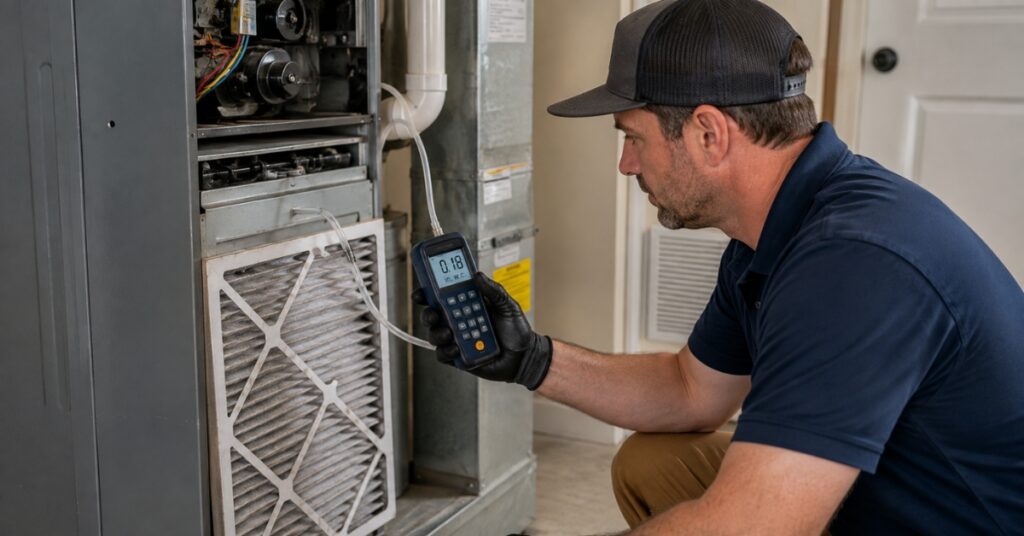
Why This Small Task Matters Most When the AC Is Busy
The importance of filter replacement becomes easier to understand when it is viewed as an airflow issue rather than simply a cleanliness issue.
During summer, the air conditioner may move enormous amounts of air through the home every day. The filter sits directly in that airflow path. As debris accumulates, the restriction can influence how effectively the system circulates cooled air and how long it must operate to maintain indoor temperatures.
That means a neglected filter can affect several things homeowners care about at once: comfort, cooling speed, runtime, and energy use.
Checking the filter will not prevent every summer AC problem. It can, however, remove an avoidable source of restriction and give the cooling system a better chance to move air as intended during the part of the year when that airflow matters most.
Frequently Asked Questions About Filter Replacement
Can a dirty filter make my AC run longer?
Yes. When a dirty filter restricts airflow, the system may have difficulty circulating enough cooled air through the home. This can result in longer cooling cycles as the air conditioner works to reach the thermostat setting.
Can replacing the filter improve cooling performance?
It can if a clogged filter is contributing to restricted airflow. A fresh filter may help restore proper airflow, but persistent cooling problems can indicate other maintenance or equipment issues that need professional evaluation.
How can I tell if my AC filter is too dirty?
A filter that is visibly coated with dust and debris is an obvious sign. Other clues can include weaker airflow from vents, longer cooling cycles, or a system that seems to struggle more than usual during hot weather.
Should I change my filter more often during summer?
Possibly. Air conditioners generally operate more frequently during summer, meaning more air and airborne debris pass through the filter. Homes with pets, higher dust levels, or particularly heavy AC use may need more frequent filter checks.
Will lowering the thermostat compensate for a dirty filter?
No. A lower thermostat setting does not remove an airflow restriction. It may simply cause the cooling system to operate longer while trying to reach the lower temperature.
Is a higher-rated filter always better for cooling?
Not necessarily. Filters with greater filtration capability can also create more resistance to airflow in some systems. The appropriate filter depends on the HVAC equipment and manufacturer recommendations.
What should I do if cooling is still weak after replacing the filter?
Check that supply and return vents are open and unobstructed. If airflow remains weak or the home still struggles to cool, professional HVAC service can help identify other causes, such as equipment maintenance needs or airflow problems elsewhere in the system.